Academic & Policy Writing

Journal Articles & Analysis

Journal Articles & Analysis

Select Analysis

Europe’s Natural Gas Security of Supply: Policy Tools for Single Supplied States

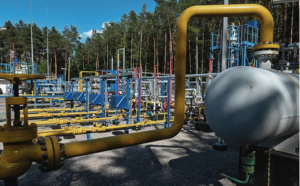
Several European states depend on Russia as their sole supplier of natural gas, yet Brenda Shaffer’s case studies of Poland, Bulgaria, Lithuania, and Hungary show that single-supplier states can still secure adequate gas security without necessarily adding new supply sources or cutting their share of Russian gas.

She finds that the most effective strategies are state-led: expanding storage capacity, enforcing strict emergency response rules, stockpiling alternative fuels for power plants, and in some cases keeping strategic energy infrastructure under state ownership even where that means resisting EU unbundling and market liberalization rules.

Can New Energy Supplies Bring Peace?

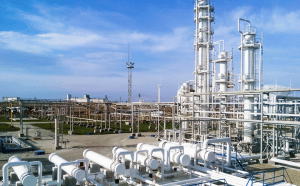
In this Mediterranean Policy Program brief for the German Marshall Fund’s Eastern Mediterranean Energy Project, Dr. Brenda Shaffer examines claims that the natural gas discoveries offshore Israel and Cyprus could serve as a catalyst for regional peace.

She finds the odds are low: the reserves are too modest to reshape major export markets, the potential economic gains are not large enough to overcome deep-rooted political conflicts, and there is no precedent elsewhere for energy trade driving peace between states in conflict.

Dr. Shaffer argues that while these resources are unlikely to resolve the region’s disputes on their own, they can reinforce political progress that is already underway, and can meaningfully benefit the region by lowering desalination costs, improving electricity access for the Palestinian territories, Jordan, and Lebanon, and reducing pollution from power generation.

Natural Gas Supply Stability and Foreign Policy

Natural gas, unlike oil, moves mainly through fixed pipelines under long-term contracts, which gives politics far more room to shape supply than it does in the oil market.

Brenda Shaffer studies 35 gas supply relationships and two case studies to show that disruptions can be triggered by supplier, transit, or consumer states alike, and that the states least dependent on a given trade relationship are the ones best positioned to use supply as a foreign policy weapon.