Academic & Policy Writing

Brenda Shaffer's work is often featured in some of the world's most prestigious academic publications, and she has contributed to a number of books on oil and energy policy, energy security, ethnic politics and foreign affairs.

Journal Articles & Analysis

Select Analysis

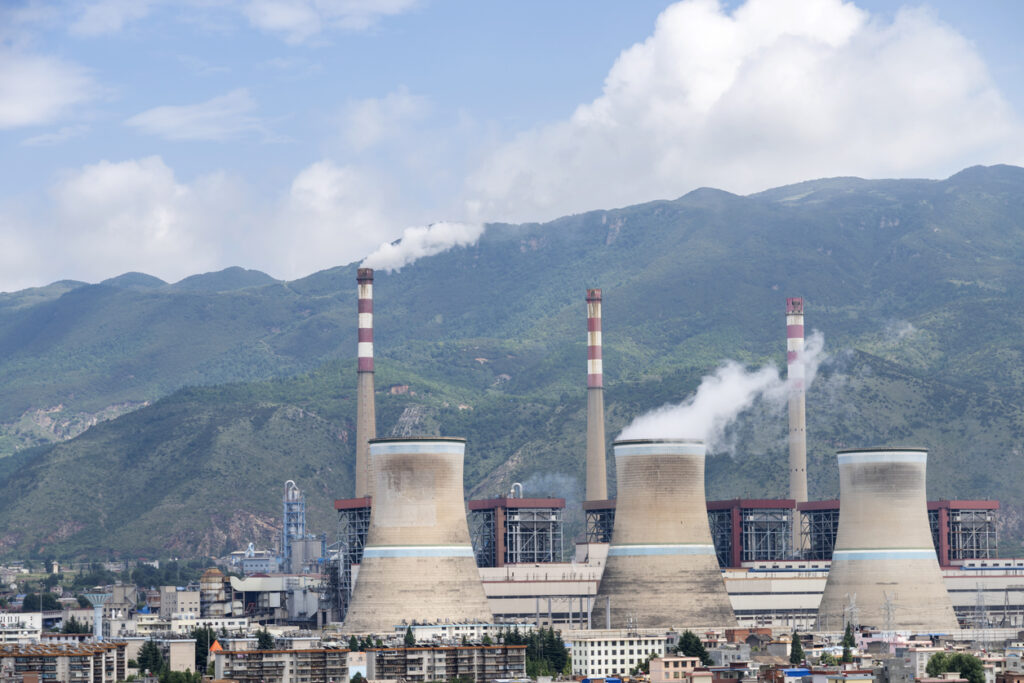
China’s Net Zero Advantage

In “China’s Net Zero Advantage,” Michael Doran and Brenda Shaffer argue that the Western climate movement has become an unwitting partner in Beijing’s industrial strategy.

China remains the world’s largest emitter and burned more coal in 2024 than the rest of the world combined, yet it draws little of the scrutiny that climate activists reserve for Western energy and manufacturing.

The result is an asymmetry the authors sum up bluntly: “China adds. The West subtracts.” Doran and Shaffer trace how Chinese-linked funding, elite cultivation of Western intermediaries, and opposition to nuclear power all serve to keep the West dependent and constrained while Beijing’s industrial base keeps growing.
Syria’s Energy Sector and Its Impact on Stability and Regional Developments

Syria’s oil and gas fields, largely under YPG control in the east, could fund reconstruction and reshape the country’s regional standing — but only if Damascus, Washington, and Ankara can settle who controls them.

Professor Brenda Shaffer’s Atlantic Council issue brief lays out Syria’s energy potential after Assad: the prospects for restoring oil and electricity output, the roles Turkey, Qatar, and Saudi Arabia are already stepping into, and how Syria could eventually become a transit route for Israeli and Egyptian gas heading to Turkey and Europe.

She closes with four recommendations for Washington, from unlocking World Bank financing to working with Ankara on regional energy integration.

Dis-empowering Africa: How the West’s energy policies fuel poverty in Africa

Africa has the world’s lowest per capita energy use, yet the World Bank, the IEA, and the G7 are pushing it to skip fossil fuels and adopt renewable energy that cannot deliver reliable power without a stable baseload.

In this CNAPS issue brief, Brenda Shaffer argues there is no real-world precedent for “leapfrogging” straight to renewables, and that cutting off financing for African fossil fuel development is deepening the continent’s poverty rather than fighting climate change.

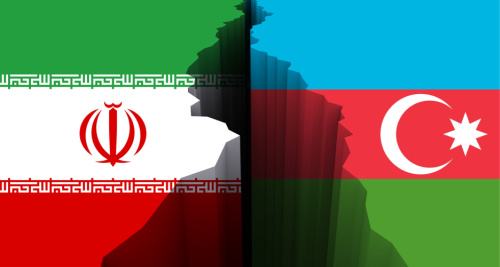
President Aliyev: Relations between Azerbaijan and Iran are at the lowest level ever

President Ilham Aliyev warns that Azerbaijan-Iran relations have hit their lowest point in history, citing what he calls state-sponsored terrorism from Tehran.

Brenda Shaffer traces the roots of this hostility, from Iran’s opposition to Azerbaijani independence in 1991 through its arms support for Armenia in the 2020 war, and examines the fallout from January 2023’s deadly attack on Azerbaijan’s embassy in Tehran.

With Winter Coming, Europe Is Walking Off a Cliff

Europe’s energy crisis didn’t start with Russia’s invasion of Ukraine, it was two decades in the making.

Brenda Shaffer argues that ideologically-driven policies, phasing out nuclear and coal, banning fracking, and underinvesting in renewables, left Europe dangerously exposed even before the war began. She lays out what leaders got wrong and what it would actually take to fix it: long-term gas contracts, reversing nuclear shutdowns, and a technology-neutral energy strategy.

Israel’s Role in the Second Armenia-Azerbaijan War and Its Implications for the Future

Israel’s 25-year defense partnership with Azerbaijan proved decisive in the 2020 war with Armenia, and its implications reach far beyond the battlefield.

Brenda Shaffer examines how Azerbaijan’s innovative use of Israeli drones, integrated with Turkish systems, reshaped the conflict, helped thaw Turkey-Israel relations, and gave Israel a foothold of influence among the ethnic Azerbaijani population inside Iran.

Book Chapters

Select Chapters

EU Energy Policy: The Role of the South Caucasus

In this chapter from Geopolitics and Security: A New Strategy for the South Caucasus (Konrad-Adenauer-Stiftung, Georgian Institute of Politics, and DGAP, 2018), Brenda Shaffer examines how energy has become a defining thread in EU-South Caucasus relations.

She looks at the Southern Gas Corridor as the first new gas supply route to reach Europe in decades, and weighs how far the EU has actually gotten in reducing its dependence on Russian gas.

The chapter also flags the risks that could disrupt the region’s energy role going forward, including threats to pipeline infrastructure, the possibility of renewed Armenia-Azerbaijan conflict, and instability in transit states like Turkey and Georgia.

Shaffer closes with recommendations for better aligning EU energy and foreign policy and investing in regional security.

The Islamic Republic of Iran’s Policy toward the Nagorno-Karabakh conflict

This chapter, from The International Politics of the Armenian-Azerbaijani Conflict: The Original “Frozen Conflict” and European Security (ed. Svante E. Cornell, Palgrave Macmillan, 2017), examines how Tehran approaches the Armenia-Azerbaijan conflict.

Shaffer argues that Iran’s policy is driven by pragmatic security concerns rather than the religious solidarity often assumed to guide it.

The chapter shows how Iran’s stance is shaped above all by its desire to prevent ethnic mobilization among its own large Azerbaijani minority, along with its broader relationships with Russia and the United States. In doing so, it challenges the common assumption that the Sunni-Shiite divide is a defining fault line in Middle East politics, since Iran’s handling of a conflict between two Muslim-majority states doesn’t follow that pattern.

Security and Crossborder Cooperation in the Black Sea region

In this chapter, “Energy and Security in the South Caucasus” (in Security and Cross-Border Cooperation in the EU, the Black Sea Region and Southern Caucasus, ed. Ayça Ergun and Hamlet Isaxanli, NATO Science for Peace and Security Series, IOS Press, 2013, pp. 167-175),

Brenda Shaffer looks at how much energy actually shapes security outcomes in the South Caucasus and Caspian region. Her central claim is that energy is a real factor but not the main driver of the region’s security dynamics: it played little part in the outbreak of the Nagorno-Karabakh conflict or Georgia’s secessionist conflicts in Abkhazia and South Ossetia, and being a major energy exporter or transit state has done little to help Azerbaijan or Georgia recover their occupied territories.

She also finds that energy flows have not functioned as an inducement to peace and are unlikely to do so going forward. Where energy does matter, Shaffer argues, is in keeping the Caspian producers on the West’s security radar, in giving regional and global powers a reason to compete for influence over pipeline routes and energy infrastructure, and in giving transit states leverage over their landlocked, energy-producing neighbors.

She also notes that Azerbaijan’s oil and gas wealth has funded a serious military buildup that will shape the region’s security balance for years to come.