
Academic & Policy Writing

Book Chapters

Book Chapters

Select Chapters

EU Energy Policy: The Role of the South Caucasus

In this chapter from Geopolitics and Security: A New Strategy for the South Caucasus (Konrad-Adenauer-Stiftung, Georgian Institute of Politics, and DGAP, 2018), Brenda Shaffer examines how energy has become a defining thread in EU-South Caucasus relations.

She looks at the Southern Gas Corridor as the first new gas supply route to reach Europe in decades, and weighs how far the EU has actually gotten in reducing its dependence on Russian gas.

The chapter also flags the risks that could disrupt the region’s energy role going forward, including threats to pipeline infrastructure, the possibility of renewed Armenia-Azerbaijan conflict, and instability in transit states like Turkey and Georgia.

Shaffer closes with recommendations for better aligning EU energy and foreign policy and investing in regional security.
The Islamic Republic of Iran’s Policy toward the Nagorno-Karabakh conflict

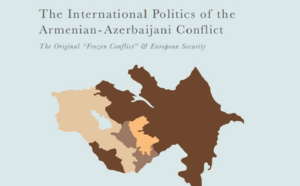
This chapter, from The International Politics of the Armenian-Azerbaijani Conflict: The Original “Frozen Conflict” and European Security (ed. Svante E. Cornell, Palgrave Macmillan, 2017), examines how Tehran approaches the Armenia-Azerbaijan conflict.

Shaffer argues that Iran’s policy is driven by pragmatic security concerns rather than the religious solidarity often assumed to guide it.

The chapter shows how Iran’s stance is shaped above all by its desire to prevent ethnic mobilization among its own large Azerbaijani minority, along with its broader relationships with Russia and the United States. In doing so, it challenges the common assumption that the Sunni-Shiite divide is a defining fault line in Middle East politics, since Iran’s handling of a conflict between two Muslim-majority states doesn’t follow that pattern.

Security and Crossborder Cooperation in the Black Sea region

In this chapter, “Energy and Security in the South Caucasus” (in Security and Cross-Border Cooperation in the EU, the Black Sea Region and Southern Caucasus, ed. Ayça Ergun and Hamlet Isaxanli, NATO Science for Peace and Security Series, IOS Press, 2013, pp. 167-175),

Brenda Shaffer looks at how much energy actually shapes security outcomes in the South Caucasus and Caspian region. Her central claim is that energy is a real factor but not the main driver of the region’s security dynamics: it played little part in the outbreak of the Nagorno-Karabakh conflict or Georgia’s secessionist conflicts in Abkhazia and South Ossetia, and being a major energy exporter or transit state has done little to help Azerbaijan or Georgia recover their occupied territories.

She also finds that energy flows have not functioned as an inducement to peace and are unlikely to do so going forward. Where energy does matter, Shaffer argues, is in keeping the Caspian producers on the West’s security radar, in giving regional and global powers a reason to compete for influence over pipeline routes and energy infrastructure, and in giving transit states leverage over their landlocked, energy-producing neighbors.

She also notes that Azerbaijan’s oil and gas wealth has funded a serious military buildup that will shape the region’s security balance for years to come.